
Here's the honest version of that answer, including who it isn't for.
What does "AI video marketing" actually mean for a service business?
AI video marketing means using AI tools to produce video at volume from material your business already has, then distributing it to the buyers you want, on social platforms and as ad creative. In practice that means AI presenters or voice, AI visuals, and AI-assisted edits of footage you already own. The raw material is your proof, your customers' questions and your sales objections.
Three terms matter for the rest of this post:
- Proof library: the reviews, case studies, before-and-afters, completed work and expert answers that currently live in your sales calls and your camera roll, not in your marketing.
- Retargeting audience: a list, built automatically by the ad platforms, of people who watched or engaged with your videos. You can show ads only to those people. A video view from the right prospect is a hand-raise.
- Qualified sales call: a conversation with someone who fits, has the problem, can pay and is ready to talk about it. The only marketing metric that matters.
Note what's not in that definition: a fixed number of videos per month, followers, or going viral. Those are outputs a supplier finds easy to count. None of them is the reason to do this.
Why "does AI video work?" is the wrong question
It's the wrong question because AI is leverage, not strategy. AI video amplifies whatever you point it at. Point it at a proven offer, real proof and a sales team that closes, and it multiplies all three. Point it at an unproven offer or a business with no follow-up, and it produces expensive nothing, faster.
The industry's own data shows the confusion. Wyzowl's 2026 survey found that 91% of businesses use video as a marketing tool and 63% of video marketers have used AI video tools, up from 51% the year before. 82% say video gives them a good return. But ask how they measure that return and the picture changes: 67% quantify it through video views, 63% through likes and shares, and only 32% through bottom-line sales. Two thirds of the people telling you video "works" are measuring it in a unit you can't bank.
So "is AI video worth it?" has no general answer, in the same way "is a bigger van worth it?" has none. It depends on whether you've got deliveries to make. What you can answer is whether your business has the conditions under which it pays. There are four.
When is AI video worth it? The four conditions
AI video is worth it when all four of these are true. Three out of four is a maybe. Two is a no.
1. You have a proven offer with real demand
You're already closing customers, you know roughly what one is worth, and you know the market exists because you've been selling into it for years. AI video can't find product-market fit for you. It can only tell more of the right people about the fit you already have.
2. You have proof and expertise you're not using
"We have plenty of proof, but we don't use it properly" is one of the most common lines I hear from founders. Ten years of completed work, a drawer full of reviews, an owner who can answer any buyer question from memory. None of it in the marketing, because the founder has no time to film and the last videographer cost too much to book monthly. This is the raw material. A business without it has nothing to amplify.
3. Your sale depends on trust, and someone closes qualified calls
The customer value is high enough that a prospect needs to trust you before they buy: renovations, financial advice, legal, medical, funeral plans, higher-ticket B2B services. And when a qualified prospect books, someone follows up fast and closes a sensible share of them. If your leads already sit uncalled for two days, video will send you more leads to not call.
4. Something downstream captures the attention
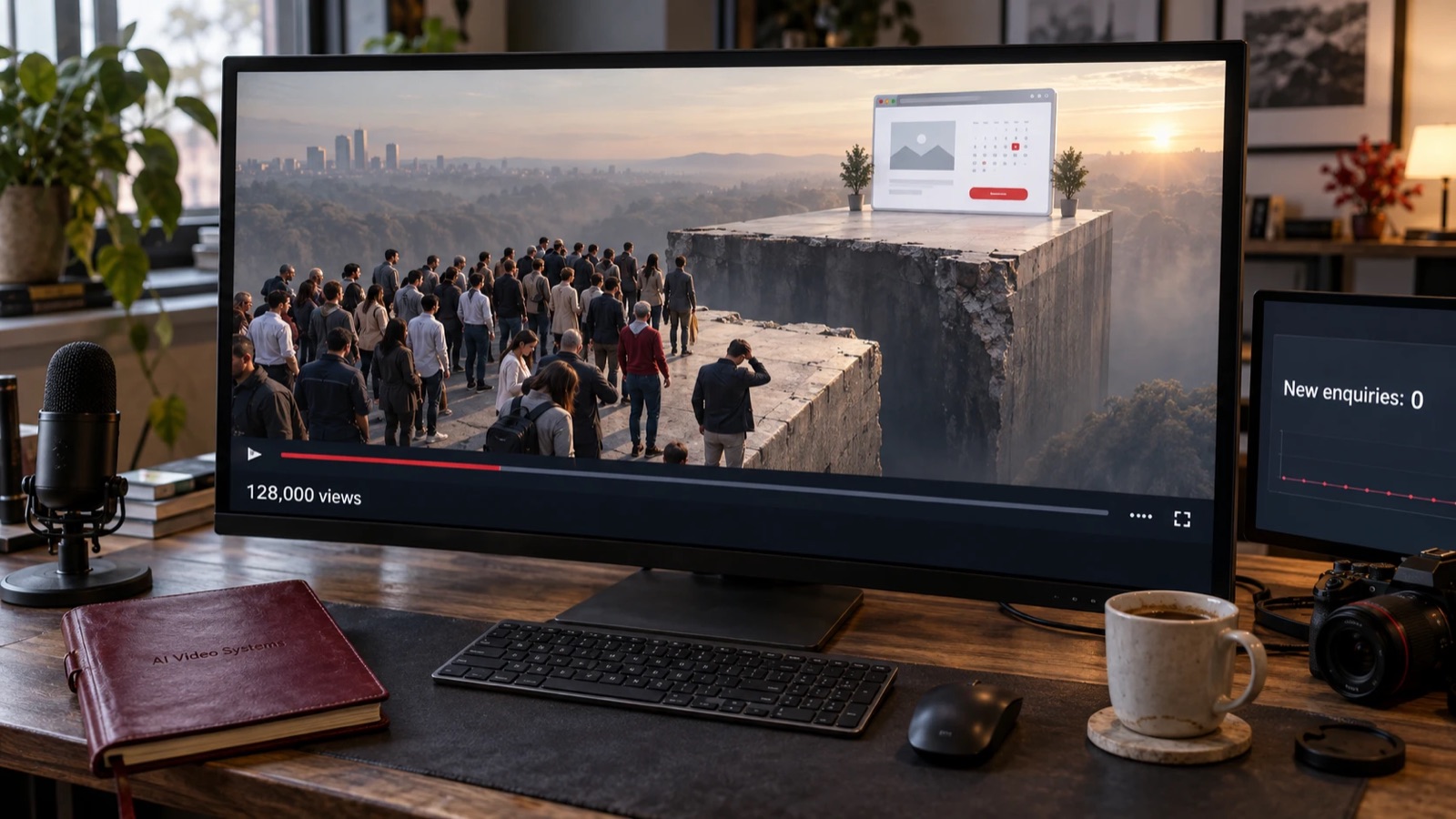
Retargeting audiences being built from viewers, a landing path with an offer on it, follow-up that runs whether or not the founder remembers. Without this, video produces the Attention Leak: people saying "I see you everywhere" and a pipeline that hasn't noticed. Demand generation without lead generation is how most "we tried video" stories end.
When all four are in place, the results show up as enquiries, not just views. For Ironclad Finance, an AI-led content and lead-generation campaign produced more than 5 million views and 74 inbound enquiries in seven weeks. For Mortgage Fit, hundreds of thousands of targeted views and 20+ enquiries inside five weeks. Both were established financial-services businesses with proven offers. Neither result was the video's doing on its own. The video was the multiplier on a business that already had something worth multiplying.
What AI video actually changes in the numbers
Once the conditions hold, AI video moves three numbers a service business cares about. None of them is views.
Creative cost and volume. A commercial or marketing video from a videographer runs $1,000 to $5,000+ per project, and production is quoted at $800 to $4,000 per finished minute. At that price an established business makes four or five videos a year and runs the best one until it dies. AI production takes the cost of the next video down to a fraction of that, which means you can test thirty angles a month instead of one, find the three that attract buyers, and never again watch a winning ad fatigue with nothing behind it.
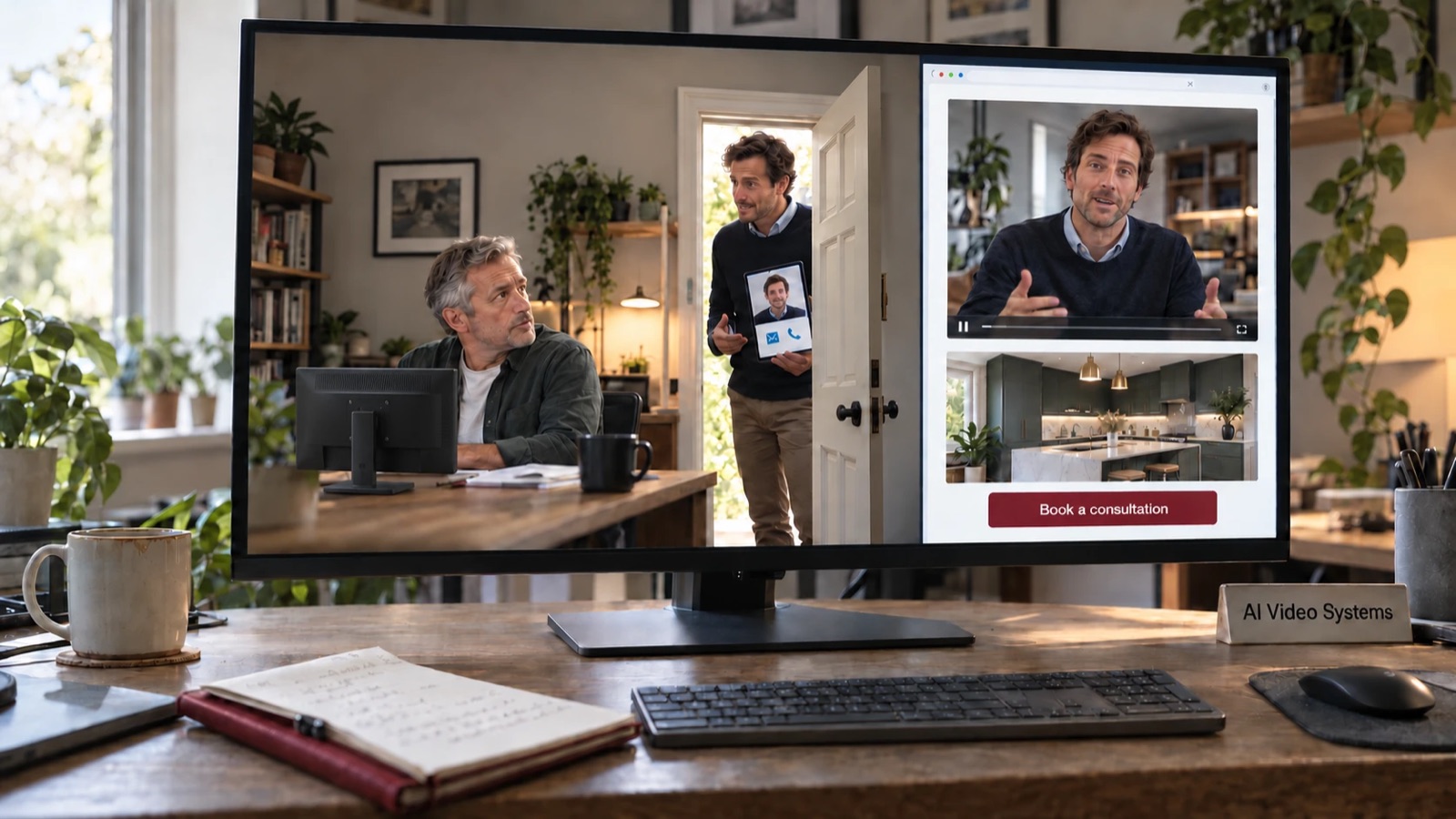
How warm the leads are. This is the one that pays. A prospect who has watched your founder answer their exact objection, seen a completed job like theirs and heard roughly what it costs arrives on the call already sold on half of it. Sales stops spending the first twenty minutes doing marketing's job. Show rates go up, price objections come down, and the same lead volume closes at a higher rate. That isn't a video effect; it's what warmth does. This is where the revenue leaks in most accounts, and it's the leak content fixes.
What you own when the campaign stops. Cold ads stop producing the day you pause them. Video builds retargeting audiences, a library of proven messages and a body of proof that keeps working. Your next campaign starts warmer than your last one did.
To be clear about what it doesn't change: it won't make cheap leads appear where none existed, and it won't fix broken follow-up. The value shows up in cost per qualified call and cost per customer, not cost per lead. Judge it on CPL and you may conclude it made things worse, because warmer leads sometimes cost more each and convert at a multiple of the rate.
When AI video is not worth it
This is the section most suppliers won't write. A "yes" with no "no" attached isn't an answer, it's a pitch. AI video is the wrong spend when:
- The offer isn't proven yet. If you're still working out what you sell and to whom, video at volume broadcasts the confusion. Sell it by hand until it's repeatable.
- The customer is low-value or the margin is thin. If one extra customer is worth a few hundred dollars in gross profit, the economics of any managed acquisition system don't stack. Cheaper channels will serve you better.
- Nobody owns follow-up. No one accountable for calling leads, no CRM discipline, no capacity to fulfil more work. Fix that first; it's cheaper and it pays sooner.
- You want a batch of cheap AI videos and nothing behind them. Content with no distribution plan, no retargeting and no measurement is an expense, not an investment. Plenty of suppliers will sell it to you anyway.
- You're chasing views for their own sake. Virality among people who can never become customers is worth exactly nothing. On-target attention from a few thousand of the right people beats a million of the wrong ones.
- Synthetic delivery would jar in your category. There are moments where a generated presenter is the wrong messenger. Parts of funeral care are one; grief doesn't want an avatar. That isn't a reason to avoid paid acquisition in those sectors. Compare Funerals' 30-day result came from ads built around what the buyer actually cares about, not from a generated presenter. It's a reason to choose the format by the buyer, not by the tool.
- You'd be tempted to fabricate. AI makes it trivially easy to invent a testimonial or an expert who doesn't exist. If the plan needs that to work, kill the plan. Fake proof is the fastest way to turn a brand risk into a brand fact.
The founder objection I take most seriously is "AI video could make the brand look cheap." It can, if it's generic; the FAQ below covers the fix. Generic AI content is about to be worthless. Specific proof never is.
How to tell if it's worth it for your business, before you spend anything
Answer these five honestly. They're the questions I'd ask you on a call anyway.
- Do referrals close at a noticeably higher rate than paid leads?
- Does your sales team spend the first part of every call explaining the basics?
- Do you have reviews, case studies or completed work that prospects never see before they enquire?
- Has a winning ad fatigued in the last six months with nothing ready to replace it?
- If someone asked what last quarter's ad spend produced in revenue, would you be guessing?
A "yes" on the first question matters most: it means your paid leads are arriving cold, and warmth is what content supplies. Three or more "yes" answers is the profile of a business where AI video pays. The call that follows is a diagnostic, not a pitch: qualification cuts both ways, and the honest outcome is sometimes that the leak is in follow-up or sales and video should wait. That's why the question is Book A Free Call, not "can you buy".
Frequently asked questions
Do AI-generated video ads work for professional service businesses?
Yes, when the business already has a proven offer, real proof to build the videos from, someone who closes qualified calls and something that captures the attention. AI video is leverage on a strategy that works, not a substitute for one. For Ironclad Finance, an AI-led campaign produced 5M+ views and 74 enquiries in seven weeks. Whether they look authentic depends on the guardrails: see will AI video ads look fake? and how to choose an AI video ads agency.
Do I have to be on camera for AI video marketing to work?
No. The founder's job is to be the source, not the studio. An hour or two of extraction a month, covering your answers to buyer questions, your proof and your objections, gets turned into content by the system. Where founder footage exists it gets used; where it doesn't, AI presenters, voice and visuals carry the message. The only thing that can't be outsourced is the expertise itself.
Will AI video make my brand look cheap?
Generic AI video will. Content generated from a prompt with no proof behind it looks like everyone else's, and buyers can tell. AI video built from your actual reviews, completed work and expert answers, with a human approving what goes out, reads as a well-run business with a lot to show. The variable is what goes in, not the tool.
How long before AI video produces sales calls?
Expect the first content live within the first month, meaningful audience data by day 60, and an effect on qualified calls you can see in the numbers over roughly 90 days as retargeting audiences build. The early weeks are spent learning which messages attract the right buyers. If a supplier promises calls in week one from a cold audience, they're describing ads, not a demand system.
Is AI video better than hiring a videographer?
It's a different job. A videographer produces a small number of high-production pieces at $1,000 to $5,000+ each, which suits a brand film or a flagship case study. AI production is for volume and testing: dozens of short pieces a month that find which angles attract buyers, then feed the winners into ads. Many businesses use both. Neither one fixes an offer or a sales process.
Does AI video replace my paid ads?
No. It makes them work harder. Content warms the audience and builds retargeting lists; ads capture the demand that creates. Run separately, content produces attention that leaks and ads sell cold to strangers. Run together they're one loop, which is the Attention-to-Revenue System end to end.
Sources
- Wyzowl, Video Marketing Statistics 2026: survey of 266 marketers and consumers conducted in late 2025. 91% of businesses use video; 63% of video marketers have used AI video tools (51% the prior year); 82% report a good ROI; 67% measure ROI by views, 63% by engagement and 32% by bottom-line sales; 89% of consumers say video quality affects their trust in a brand.
- Fash, Videographer Prices & Rates (2026 data): corporate commercials and marketing videos $1,000–$5,000+; video production $800–$4,000 per finished minute.